
Four fundamental components of SEO (Search Engine Optimization) explained in detail
There are several things we need to take into consideration when doing any SEO (search engine optimization) in 2026. These are broken down into 4 main areas: Local SEO, Technical SEO, On-Page SEO and Off-Page SEO.
Google has changed a lot and continues to improve on their systems for ranking websites. A lot of core features of Googles algorithm has not changed, one would be backlinking and domain/page authority. This is getting high quality links from other websites linking back to your website. Social media sites, other websites with good authority that are related with your product or service you offer, and your local chamber of commerce website could be an example of good quality backlink.
Local SEO (Search Engine Optimization)
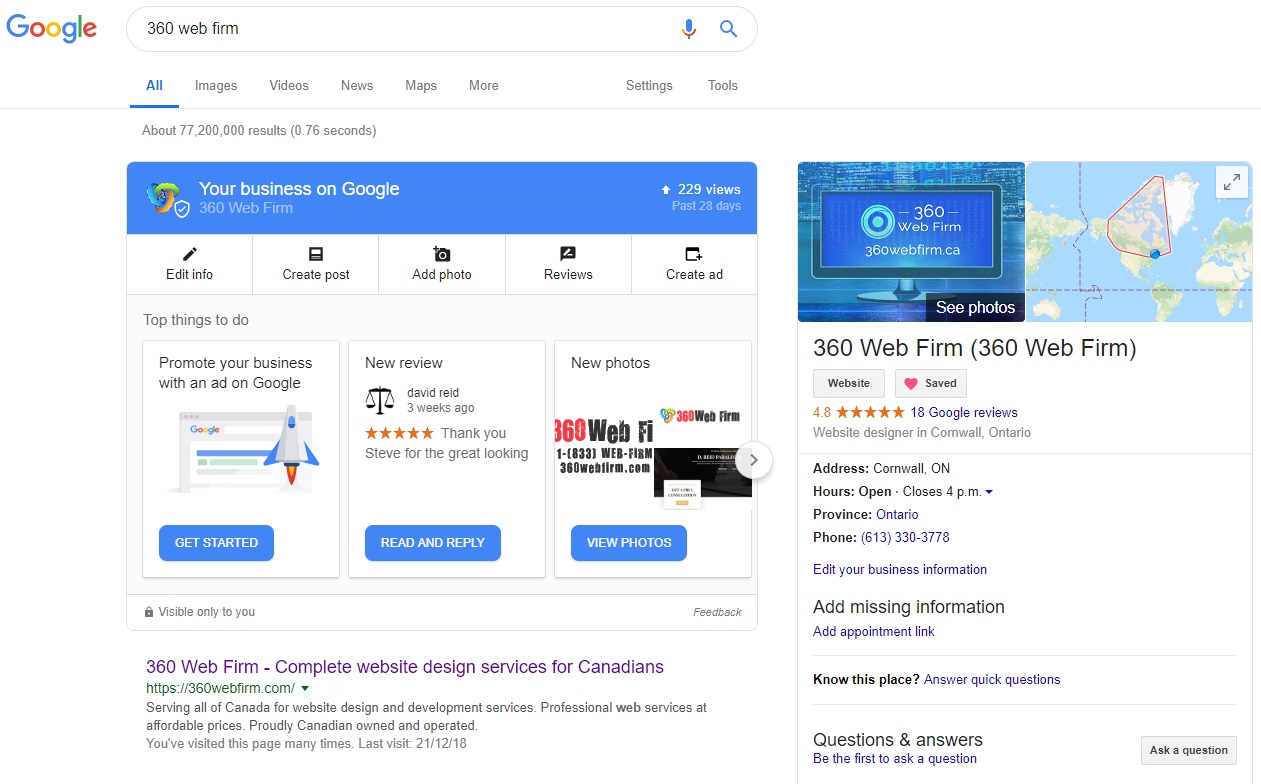
It focuses on appearing in “near me” searches, Google Maps, and local “map pack” results, making it essential for physical storefronts or service-area businesses. This also involves the Google Business Profile (use to be called Google my business), and this also needs to be set up and configured with proper categories and services, correct address, web URL and phone. With your local Google business page, Google uses three factors to place your business as the top listing’s businesses:
- Relevance, how close does the search query match what your business offers. Google will look for your top category and service you offer and then completeness and accuracy of your business information.
- Distance or Proximity, how far your business is from the person doing the search query.
- Prominence, this would include trust and authority. Trust would be in the form of reviews and how well your business is trusted by others. This would also include consistency with your address and other business info across many platforms and third-party directories such as yelp and your local chamber of commerce. Authority would be in the form of local backlinks from high-ranking websites.
Technical SEO
Technical SEO involves enhancing the infrastructure of your website to guarantee that search engines can effectively discover, crawl, render, and index your content. In contrast to traditional SEO, which emphasizes keywords and content, technical SEO addresses the underlying elements that constitute the basis of your site’s performance.
Key Aspects of Technical SEO
- Crawling & Indexing: Ensuring search engine bots can navigate the site, often managed through robots.txt files and XML sitemaps to prevent crawl errors.
- Website Speed (Performance): Optimizing server response times and code to meet Core Web Vitals, which directly affects ranking.
- Website Accessibility (Both On-Page and technical): Website accessibility is crucial for equal access, ensuring people with disabilities (visual, auditory, physical, cognitive) can perceive, operate, and understand online content, fostering inclusion and autonomy.
- Mobile-Friendliness: Ensuring the site is optimized for mobile users, as this is critical for search rankings.
- Security (HTTPS): Implementing SSL certificates to provide a secure connection, a key ranking signal.
- Structured Data (Schema Markup): Adding code that helps search engines understand content context, which can produce rich results.
- Site Architecture: Organizing website structure to facilitate user navigation and efficient bot crawling.
With Technical SEO, we could use Google to help us with this and to do a site audit. Google’s page speed insights testing tool is a great way to start with your technical SEO. It will show you your website using mobile and desktop versions and highlight ways to improve on. It checks 4 parameters of your website such as: Performance, Accessibility, Best practices and general SEO. It gives you results for both mobile and desktop.
On-Page SEO
On-page SEO refers to the process of enhancing specific web pages—encompassing content, HTML source code, and layout—to achieve higher rankings in search engines and draw organic traffic. This practice emphasizes aspects that you can directly manage, including keyword optimization, meta tags, headers, and the quality of content, to assist search engines in comprehending the relevance of the page.
Key On-Page SEO Elements
- Title Tag: Should be unique, compelling, and contain the target keyword, ideally near the beginning.
- Meta Description: A summary of the page (under 160 characters) that encourages clicks from search results.
- Header Tags (H1-H6): Use headers to structure content, with the H1 containing the main keyword.
- URL Structure: Create short, descriptive URLs that include the focus keyword.
- Content Quality: Focus on meeting user search intent with comprehensive, valuable, and easy-to-read content.
- Keyword Optimization: Naturally incorporate primary and secondary keywords, avoiding keyword stuffing.
- Internal Linking: Link to other relevant pages on your site to improve navigation and distribute page authority. Checking and fixing broken links.
- Image Optimization: Use descriptive file names and include keywords in the alt text for accessibility and search engine understanding.
- Mobile-Friendliness & Speed: Ensure the site loads fast and is optimized for mobile device. Utilizing a speed plugin such as WP Rocket would help.
- Website Accessibility (Both On-Page and technical): Website accessibility is crucial for equal access, ensuring people with disabilities (visual, auditory, physical, cognitive) can perceive, operate, and understand online content, fostering inclusion and autonomy.
Off-Page SEO
Activities outside your website to build authority, primarily through high-quality backlinks from other reputable sites, social signals, and brand mentions.
Off-page SEO refers to all actions taken outside of your own website to impact your rankings within search engine results pages (SERPs). It focuses on building user and search engine perception of a site’s authority, trustworthiness, and relevance through tactics like backlink building, social media marketing, guest posting, and brand mentions.
Key Aspects of Off-Page SEO
- Backlink Building: The most crucial element, where other websites link to yours, signaling to search engines like Google and Bing that your website content is valuable. Basically, linking from good quality websites with high domain/page authority back to your website. One good potential link would be like a local chamber of commerce.
- Removal of BAD/Toxic links to your website: These links can be detrimental to your good quality links and can bring down your domain authority and ranking. With the SEMrush tool, I can check on all links and submit to Google the bad toxic links to ask to not count these links. A lot of time, you will get bad spammy sites adding websites to their directories or blog posting without asking first. Unfortunately, this happens a lot and we must keep up with this as bad links will hurt your reputation.Google will most likely disregard these spammy backlinks, but you can check on you your webmasters account to be certain. Go to Security & Manual Actions, then see if there are any messages there. If there is, then you will need to act immediately.
- Social Media Marketing: Sharing content and engaging with users on social platforms to increase brand visibility.
- Brand Mentions: Unlinked or linked mentions of your brand on other websites, blogs, or forums.
- Local SEO/Citations: Creating and maintaining listings in local directories like Google Business Profile and Yelp.
- Influencer Marketing/PR: Collaborating with industry influencers to build brand authority and earn reputable links.
In Conclusion
When 360 Web Firm performs any SEO work for our customers, we use several online tools to assist us. These tools check the website we are working on and provide diagnostics and site audits to help us get started. We then must do the work on the customers website to get it to where it needs to be. Some tools we use are as follows:
- Semrush is a popular SEO and marketing tool. It offers actionable insights to enhance online visibility, evaluate competitor tactics, monitor keyword rankings, and conduct website audits.
- MOZ is a well-known collection of tools designed for digital marketing, link building, and search engine optimization.
- Google PageSpeed Insights (PSI) is a complimentary, online tool offered by Google that evaluates the content of a web page and delivers practical suggestions to enhance its speed, best practices, accessibility and performance on both mobile and desktop platforms.
- Link Building Tools to help you analyze the current backlinks and look at overall domain and page authority because of these backlinks. Building up high quality backlinks can be a lot of work and effort, but this is still a prominent way Google ranks your website.